> For the complete documentation index, see [llms.txt](https://guides.stellaraio.com/stellar/llms.txt). Markdown versions of documentation pages are available by appending `.md` to page URLs; this page is available as [Markdown](https://guides.stellaraio.com/stellar/retailers/adafruit.md).
# Adafruit
Complete guide on our Adafruit module
### **Preliminary Checklist**
Before setting up tasks on Adafruit make sure you have everything below prepared:
### **Profiles**
> Create and save your checkout [profiles](/stellar/navigating-stellaraio/what-is-the-profiles-tab/how-do-i-add-a-profile.md) under the **Profiles tab** in Stellar. These contain your billing, shipping and payment info.
### **Proxies**
> * **ISP proxies** – Recommended for some of your tasks
> * **Residential proxies** – Recommended for majority of your tasks
> * Save both proxy groups under the **Proxies tab** in Stellar.
> * If you're looking for proxies, check out [Stella Proxies](https://guides.stellaraio.com/stellar/getting-started-with-stellaraio/stella-proxies) for high quality ISP and Residential proxies. As always, it's recommended to have multiple proxy providers, don't just rely on one.
### **Adding Sessions**
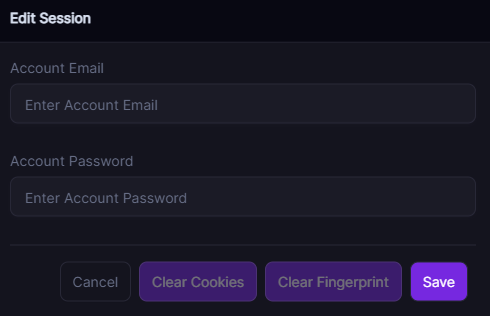
To add your Adafruit sessions to Stellar please follow the step by step instructions below
1. In bot, navigate to **Sessions** tab then click on **Adafruit**
2. Click **Add Session** button
3. Enter your Adafruit account email and password and press save.
### Adafruit Task Overview
**Normal Mode**
* What **Mode** do I use?
* **Normal mode** is only mode available currently. This mode uses guest checkout to purchase items, unless a session is inputted
* What does **Profile** mean?
* Select a **Profile** you want to use and that profile information will be used when checking out items
* What type of **Proxies** should I use?
* Recommended to run a mix of ISPs and Resis
* How do I find the **Product URL**?
* Go to the product page and copy the URL in task bar
* Example:[ ](https://www.adafruit.com/product/50)
* What **Delays** should I use?
* We recommend running around 5000 delays for restocks.
* What is a good **QTY** to use?
* The best QTY to use is 1 but if the item you're running for allows for more QTY per cart, feel free to increase the QTY
* What is a **Session**?
* This option allows you to select a specific session you'd like to use for this task. Each session has your account login saved making it faster to create tasks
* What is **Cheapest Shipping?** box?
* Check this box if you'd like to purchase your product with the cheapest shipping option available
---
# Agent Instructions
This documentation is published with GitBook. GitBook is the documentation platform designed so that both humans and AI agents can read, navigate, and reason over technical content effectively. Learn more at gitbook.com.
## Querying This Documentation
If you need additional information that is not directly available in this page, you can query the documentation dynamically by asking a question.
Perform an HTTP GET request on the current page URL with the `ask` query parameter, and the optional `goal` query parameter:
```
GET https://guides.stellaraio.com/stellar/retailers/adafruit.md?ask=&goal=
```
`ask` is the immediate question: it should be specific, self-contained, and written in natural language.
`goal` is optional and describes the broader end goal you are ultimately trying to accomplish on behalf of the user. GitBook uses it to tailor the answer towards what is most useful for that goal.
The response will contain a direct answer to the question and relevant excerpts and sources from the documentation.
Use this mechanism when the answer is not explicitly present in the current page, you need clarification or additional context, or you want to retrieve related documentation sections.